Pizza Place Cheyenne Trends Pizza Fans Should Know
Cheyenne has never been a one-note pizza town. For years, local diners could split their choices pretty neatly between classic delivery pies, family sit-down spots, and a few bar pizzas built for game nights and late hours. That picture has changed. If you spend enough time eating around town, talking with operators, and paying attention to what people actually reorder, a more interesting pattern shows up. The local pizza scene is getting sharper, more intentional, and much more responsive to how people really eat.
That matters if you are choosing a pizza place Cheyenne residents return to regularly, not just once out of curiosity. The places gaining traction are not always the ones with the longest menus or the loudest promotions. They are the shops that understand texture, timing, ingredient balance, and convenience. They know a Tuesday takeout order has different priorities than a Friday dinner with friends. They also know customers have become more educated. People notice fermentation, sauce sweetness, pepperoni curl, and whether reheated slices still hold up the next day.
What follows are the trends worth watching if you care about pizza in Cheyenne, whether you are a loyal regular, a newcomer trying to find your spot, or someone comparing neighborhood options with a more critical eye.
Cheyenne diners are choosing style over sheer menu size
A decade ago, broad menus were often seen as a strength. If a pizzeria also served pasta, subs, wings, salads, burgers, and a dessert case, it looked versatile. Now, many customers read that same menu differently. A tighter, more focused pizza program signals confidence. It says the kitchen knows what it does best and has built systems around doing it consistently.
That does not mean every successful shop has gone minimalist. It means the winning places usually have a clear point of view. Maybe they lean into a crisp, tavern-style crust that cuts cleanly into squares. Maybe they center thick, airy pies with a longer ferment and a blistered rim. Maybe they specialize in foldable slices with restrained cheese and a brighter tomato profile. Whatever the style, clarity matters.
You can see this in ordering habits. A family might once have prioritized a restaurant that could satisfy six preferences at once. Today, that same family often chooses the place that nails two or three pizza styles and executes the sides well enough. People have become more willing to order pizza from pizza experts and get everything else somewhere else.
For operators, this is a meaningful shift. A sprawling menu strains prep space, labor, ingredient management, and ticket times. In a market like Cheyenne, where staffing can fluctuate and weather affects business flow, focus is not just a branding choice. It is an operational advantage.
Dough quality is no longer a background detail
One of the clearest signs of maturity in a pizza market is when customers start talking about the crust without using the word crust. They say things like, "the chew was right," or "it had flavor even at the edge," or "it stayed crisp in the box." Those comments point to dough process, and dough process is becoming a bigger divider among pizza places in Cheyenne.
Well-made dough changes the whole pie. It affects aroma, browning, digestibility, and how the slice handles moisture from sauce or toppings. A pizza can have expensive toppings and still disappoint if the dough is rushed. On the other hand, a relatively simple cheese pie can be memorable if the dough has depth.
Several factors tend to separate better dough programs from average ones:
- longer fermentation for more flavor and structure
- careful hydration management, especially in Cheyenne’s dry climate
- disciplined proofing times instead of purely convenience-based timing
- baking methods calibrated to style, not just oven capacity
- a willingness to discard imperfect dough rather than force it into service
Cheyenne’s altitude and dry air create their own headaches here. Dough can skin over faster. Flour behaves differently than it would in a more humid environment. A shop that takes dough seriously in this region often has to make quiet adjustments that customers never see, from covered resting methods to water temperature tweaks and daypart-specific proofing. When people say a local pie feels more "dialed in," this is often what they are noticing, even if they do not phrase it that way.
Hot honey, fermented heat, and smarter spice are replacing blunt heat
Spicy pizza is not new. What has changed is how spice gets used. The old model was straightforward: add jalapeños, maybe some crushed red pepper, and call it a day. The newer model is more layered. Heat is being paired with sweetness, acidity, smoke, and salt to create a balanced finish rather than a one-note burn.
Hot honey deserves mention because it has moved from novelty to standard expectation in many pizza conversations. On the right pie, especially one with pepperoni, soppressata, sausage, or roasted vegetables, it sharpens every bite. The sweetness rounds out char and salt, while the heat lingers just enough to keep the pizza interesting. It is also practical for a restaurant because it offers customers a way to customize intensity without redesigning the whole pie.
Fermented peppers, chili oils, and spicy-sweet drizzles are showing up more often for similar reasons. They bring complexity. A good chili crisp style finish, used with restraint, can add texture and aroma as much as heat. That matters for repeat business. Customers may enjoy a punishingly hot pizza once. They come back for the one that tastes complete.
This is one area where the better shops show judgment. Too much honey can flatten a pizza into candy. Too much oil can swamp the crust and blur the toppings. The local places that get it right understand proportion. In pizza, restraint often reads as skill.
Regional styles are getting more attention, but hybrids are what really stick
Nationally, pizza conversations tend to revolve around big categories like New York, Detroit, Neapolitan, tavern, Sicilian, and Chicago deep dish. Cheyenne diners are more aware of these styles than they used to be, but the most durable local trend is not strict replication. It is adaptation.
A shop may borrow the caramelized edge and rectangular format associated with Detroit-style pizza, then tweak the crumb, sauce placement, or cheese blend to suit local preferences and kitchen realities. Another may use a New York-inspired dough formula while serving slightly smaller pies that travel better for takeout. Some places split the difference between artisan and comfort food by using premium ingredients on a crust that still feels familiar rather than overly precious.
That hybrid approach tends to work well in mid-sized markets. Customers enjoy the excitement of something style-driven, but they also want value, familiarity, and portioning that fits real life. A beautifully executed niche style can earn attention. A style with just enough flexibility to satisfy both purists and casual diners usually earns staying power.
This is especially relevant when evaluating a pizza place Cheyenne locals recommend. pizza place cheyenne If the praise sounds broad, phrases like "good for groups," "always reliable," "great reheated," "kids like it but adults do too," you are probably hearing about a place that has balanced style identity with practical appeal.
The pickup and delivery experience now shapes reputation almost as much as taste
There was a time when people judged pizza almost entirely by dine-in experience or first-bite flavor. That no longer reflects how most pizza gets consumed. Off-premise dining drives a huge share of orders, which means a restaurant’s real test often happens in a cardboard box, fifteen to thirty minutes after the pie leaves the oven.
This shift has created a new kind of excellence. Smart operators now design pizzas with travel in mind. They think about moisture migration, cheese set, venting, box insulation, and how toppings behave in motion. Some crusts that are fantastic straight from the oven collapse in delivery. Some heavily loaded pies steam themselves into mediocrity by the time they reach a house on the far side of town.
Customers have become more sensitive to this than many owners realize. A place can make beautiful pizza in the dining room and still lose loyalty if takeout is inconsistent. In Cheyenne, where weather can complicate traffic and timing for much of the year, packaging and dispatch discipline matter.
The strongest shops tend to do a few practical things well. They stage orders so pizzas do not sit too long before pickup. They avoid over-saucing travel-heavy builds. They use boxes that vent just enough to protect crust texture. They train staff to communicate honest timing instead of optimistic timing. None of this sounds glamorous, but it directly affects whether that second slice tastes worth the price.
Ingredient quality is becoming easier for customers to detect
Not every customer can identify flour protein levels or oven deck temperatures, but almost everyone can tell when toppings taste flat. This is one reason ingredient quality has become more visible in the market. Better canned tomatoes, thoughtfully chosen cheese blends, fresher herbs, and higher-quality cured meats may not always be named explicitly in marketing, yet they show up clearly on the plate.
Sauce is a good example. An overly sweet sauce used to pass without much comment in many casual pizza settings. Now it gets noticed, especially when it masks everything else. More diners seem to prefer balance, enough natural tomato character, enough seasoning to be distinct, and enough acidity to keep the pie lively. Cheese has undergone a similar shift. People notice when a blend breaks cleanly and browns properly versus when it congeals into a heavy blanket with little flavor.
Vegetables tell the story too. Fresh mushrooms release water differently than canned ones. Roasted peppers contribute sweetness and depth that raw green peppers do not. Properly sliced onions can soften into the pie rather than pulling whole toppings off with one bite. These are small details, but pizza is made of small details.
At the same time, there is a trade-off. Better ingredients cost more, and customers do have price ceilings. The most effective local shops seem to understand where to spend and where not to oversell. A premium pepperoni that cups and crisps may create more impact than a long list of luxury toppings. A cleaner cheese blend can raise the whole pizza without forcing a dramatic menu increase. Value is not about cheapness. It is about where quality is felt most clearly.
Customization is still important, but guided menus are performing better
For years, build-your-own pizza was treated as the default sign of customer freedom. That is still useful, especially for families and mixed dietary needs, but guided menus are gaining ground. In other words, people increasingly want the shop to have an opinion.
A well-composed house pie saves customers from making awkward topping combinations and gives the kitchen more control over outcome. It also reflects trust. When a customer orders a signature pizza, they are effectively saying, "show me what you do well." The strongest pizzerias welcome that test.
This does not mean customization is fading away. It means the best menus strike a balance. They offer enough flexibility for practical needs, no pork, extra vegetables, half-and-half toppings, gluten-conscious choices where available, while also presenting combinations that have already been calibrated for texture and flavor. Not every topping belongs on every crust. Not every sauce belongs with every cheese blend. The kitchen knows this, and increasingly, customers want that expertise.
You can often spot a mature pizza menu by how little guesswork it asks of the customer. The descriptions are concise, the combinations make culinary sense, and the number of choices feels generous without becoming chaotic.
Bar pies, square cuts, and shareable formats fit how people actually gather
One trend worth watching in Cheyenne is the growing appeal of formats that match social eating. Large round pies will always matter, but thinner bar pies, tavern cuts, and rectangular pizzas are particularly well suited to casual groups, sports nights, office lunches, and mixed-table dining.
There are practical reasons for this. Square-cut pizza is easy to graze on. Rectangular pies portion neatly for events. Thinner formats stay approachable even when people sample more than one variety. In social settings, this flexibility matters more than pizza purists sometimes admit.
It also supports experimentation. A group may be more willing to try a specialty topping combination when each person only commits to a small square instead of a full large pie order. For the restaurant, this can improve average ticket size while introducing customers to signature builds they might not have chosen solo.
This trend pairs naturally with the broader move toward intentional menus. A place can offer two or three strong formats, each suited to different occasions, rather than trying to make every style for every context. That kind of operational discipline usually shows up in consistency.
Dietary accommodations are expected, but not all substitutions are equal
Gluten-free crusts, dairy adjustments, vegetable-forward builds, and lighter topping profiles are now part of baseline customer expectation. What has changed is the level of scrutiny. Diners do not simply ask whether a substitution exists. They ask whether it is any good.
That is a healthy development. Too many restaurants used to treat dietary options as a token gesture, frozen crusts with poor texture, vegan cheese that refused to melt, vegetable combinations that felt punishing rather than satisfying. Customers now reward places that treat these requests with seriousness.
Still, there are limits, and experienced diners understand them. A gluten-free crust will not behave exactly like a fermented wheat dough. A dairy-free pie may need sauce and topping adjustments to avoid drying out or tasting one-dimensional. The best shops set expectations honestly and build those pizzas to succeed on their own terms rather than as compromised imitations.
If you are assessing a pizza place in Cheyenne for mixed dietary needs, look beyond the checkbox menu item. Consider whether the alternative was engineered thoughtfully. A good accommodation feels intentional, not apologetic.
Value now means consistency, leftovers, and experience, not just sticker price
Pizza remains one of the few meals people still instinctively evaluate through the lens of value. That makes sense. It is often ordered for groups, families, and informal gatherings where budget matters. But the definition of value has changed.
Customers are less likely to judge solely by the price of a large pie and more likely to consider the full outcome. Did the pizza arrive on time? Were the toppings evenly distributed? Did the crust stay intact? Were the leftovers worth eating the next day? Did the meal feel dependable enough to reorder without debate?
That last point is bigger than it seems. A reliable pizza place becomes part of household routine. It is the answer for late work nights, visiting relatives, sleepovers, and low-energy weekends. Restaurants that earn that role are not always the cheapest. They are the most repeatable.
When people recommend a spot in practical terms, "they are always solid," "the slices hold up," "pickup is easy," "nothing fancy, just really well done," they are describing value in the modern sense. Restaurants that chase novelty without mastering reliability often get attention but not loyalty.
What savvy pizza fans should watch for next
The next phase of pizza in Cheyenne will probably not be defined by one dramatic style takeover. More likely, it will be shaped by refinement. Better dough handling, more precise topping combinations, improved off-premise execution, and menus that reflect actual eating habits rather than trend-chasing. The local market is at its best when operators pay attention to those fundamentals.
If you want to read the scene well, focus on a few signals when trying a new place:
- order a plain cheese or pepperoni at least once, because strong fundamentals show there first
- notice how the crust behaves after ten minutes in the box, not just on the first hot bite
- pay attention to whether signature pies feel composed or simply overloaded
- judge pickup timing and packaging, since that predicts the weeknight experience
- test the leftovers, because great pizza often proves itself the next morning
That final test is more revealing than people think. Plenty of pizzas impress when they are blazing hot. Fewer keep their structure, flavor, and texture after cooling and reheating. A pie that survives that trip usually came from a kitchen with discipline.
Cheyenne’s pizza landscape is more nuanced now than outsiders might expect. There is room for classic comfort, style-driven craft, family-focused consistency, and newer flavor ideas that actually earn their place. For fans, that is the good news. You do not need the biggest menu or the loudest marketing to find a strong slice. You need a place that understands the details, respects the dough, and knows how local diners live.
That is where the best trends are pointing, and it is why choosing the right pizza place Cheyenne diners trust has become more interesting than ever.
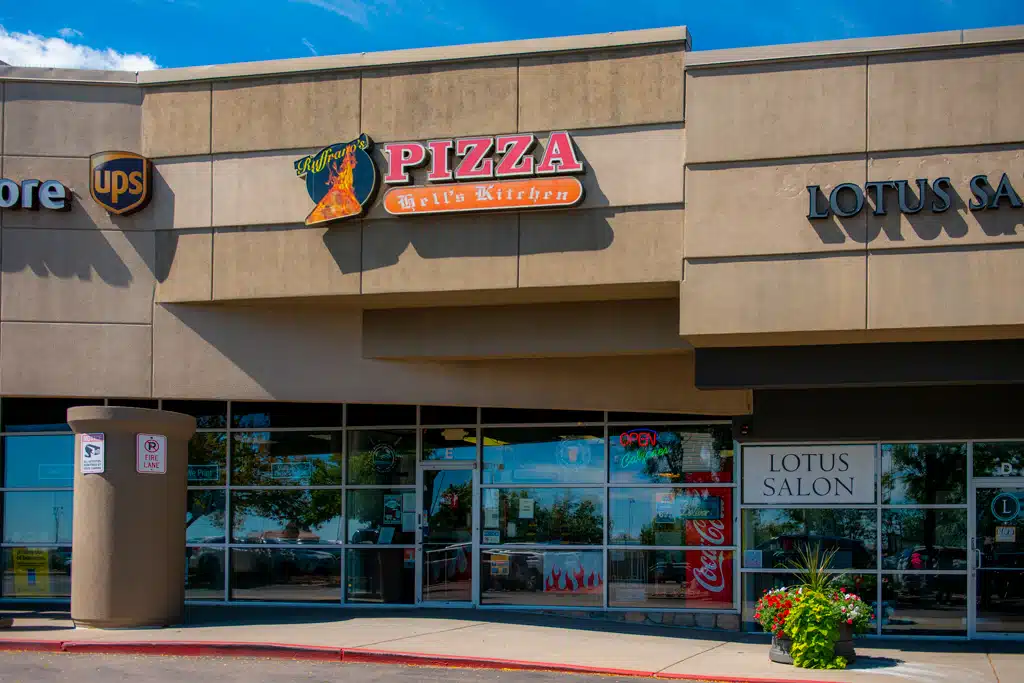
Ruffrano's Hell's Kitchen Pizza Cheyenne
Address: 1670 E Cheyenne Mountain Blvd, Colorado Springs, CO 80906
Phone number: +17195764355
FAQ About Pizza Place Cheyenne
What's the most popular pizza place?
The "most popular" pizza place depends on whether you measure by location count, total sales, or customer favorite status.
What is the 2 pizza rule?
The two-pizza rule is a management principle made popular by Amazon founder Jeff Bezos. It states that a team or meeting should never be larger than what can be fed with two large pizzas—typically translating to a group of 5 to 10 people (or roughly 6 to 12 people depending on appetites).
Is 2 pizzas enough for 10 people?
No, 2 pizzas are usually not enough for 10 people.